Creative Thinking Hub

Creative thinking expert Jim Connolly, shares tips & resources to help you think more creatively.

  • Home
  • About
    • Get in Touch
    • How Jim’s Brain Was Rewired
    • Creative Thinking Techniques: All of them
    • Creative Resources
    • What is Creative Thinking Hub?
  • Bring me your problem

Overcome creative burnout: Here’s the only advice you need

Jim Connolly March 17, 2026

avoid creative burnout, creative burnout, creative thinking, expert, Jim Connolly

Photo by @felirbe

I have some unusual advice for you, regarding creative burnout.

Dealing with burnout is something I get asked about at least once a week. However, I was sparked to share my only piece of burnout advice with you, after a video I saw on the subject from an artist YouTuber. 

The video offered X number of ways to overcome creative burnout. It was generic advice. No sources were given. There was no mention that if we feel burnt out, we should speak with our doctor. No mention that it could be a sign that we have a thyroid problem, a vitamin deficiency or even that it could mean we’re suffering from depression.

My only piece of creative burnout advice

Burnout is an occupational phenomenon, often known as work-related stress. It’s not a creative-specific thing. Creative thinking experts may have experienced it. But so have bus drivers, attorneys, clowns, chefs and those in every other occupation. Don’t ask any of us for this type of advice. We’re as unqualified as everyone else, when it comes to diagnosing or treating burnout.

overcome creative burnout

Photo: Tima Miroshnichenko

Instead, follow a safe, treatment pathway

  • Speak with your doctor. They can provide you with the appropriate tests and if necessary, medication. 
  • Depending on the results after your consultation with the doctor, you may then be advised to meet with a psychologist, psychotherapist or psychiatrist. 

The immediacy of answers from YouTube, free of charge, makes YouTube (or high-ranking websites) an attractive option for us when we want advice. 

But we need to remember that regardless of how many likes, subscribers or views someone has, unless they’re qualified, experienced, medical professionals, we should never take medical advice from them. 

Filed Under: artists, Creative Thinking, Inspiration, Problem Solving, The Creative Industries

Einstein explains why your imagination is so important

Jim Connolly October 15, 2025

Creative thinking experts, Einstein, jim connolly, imagination

We all know that Albert Einstein had one of the greatest scientific minds in history. What many people don’t know, is that Einstein was also a passionate artist, a creative genius, who called upon his artistic imagination to see into the mysteries of the universe and unravel them.

Here’s a quote from The Saturday Evening Post in 1929, which shows the importance Einstein attributed to his artistic imagination:

“I am enough of the artist to draw freely upon my imagination. Imagination is more important than knowledge. Knowledge is limited. Imagination encircles the world.”

Yes, it is essential for us to build our bank of knowledge. However, it is just as important to embrace the power of our imagination and develop our creative thinking skills.

Knowledge alone is not enough. As Calvin Coolidge famously said, the world is full of educated derelicts.

This post is dedicated to creative powerhouses everywhere, who work in areas not usually associated with creative thinking. Including, Howard Neiswender, Ish Samarakoon and Dr M Anand.

Photo by Maks Key 

Filed Under: artists, Creative spark, Creative Thinking, Problem Solving, The Creative Industries

Creativity and the tools we use

Jim Connolly July 5, 2025

Dylan thomas, writing hut, writing shed, creativity

Photo credit: Tony in Devon.

I’ve seen the shed where Dylan Thomas did much of his writing (see above). It reminded me of the tiny shed where Roald Dahl wrote.

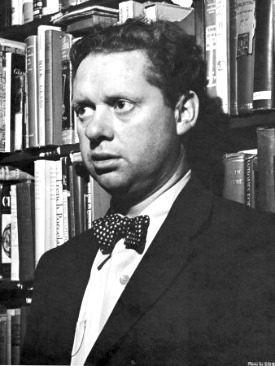
Dylan_Thomas_photo

Something that struck me about these amazing writers, was how extremely sparse their surroundings were.

Nothing fancy.

Just a space where they could think and work. A place where they could create.

The mechanics are secondary

Often, we get caught up in the mechanics of creativity. What software to work with, what type of pencils to use, whether to use a digital or analogue notebook.

And many creative professionals send more time searching the internet for so-called creativity hacks, than they spend producing their art.

To a lesser or greater degree, these are all stalling tactics. Once we have the basics in place, it’s time to start creating. Even if it’s in a tiny shed.

Dylan Thomas photo credit.

Filed Under: artists, Creative spark, Creative Thinking, Creative Writing, Inspiration, Problem Solving, The Creative Industries

How to find the answers you need, Einstein style!

Jim Connolly June 18, 2025

creative einstein, creative thinking experts, creative answers, jim connolly

One of the keys to problem solving, is to learn how to stick with the challenge for long enough to find the answer you need.

Einstein famously said: “It’s not that I’m so smart, it’s just that I stay with problems longer.”

I think we can all agree that Einstein was one of the greatest minds in history, however, his decision to stick with a challenge and work on it for a long time is something we can all benefit from.

Creative thinking requires effort

When I talk about creative thinking to young adults, one of the most common phrases I hear is a variant of; ‘It’s not as easy as it sounds’. Many people seem to be programmed to seek the easy or lazy answer by default. Then, if the answer doesn’t come easy, they quit. This places a very low ceiling on their potential, as there’s only so far someone can go if they are not prepared to think deeply, when required.

If I have a challenge that’s proving a tricky nut to crack, I employ a few creative strategies before I decide it’s beyond me.

  • I take the problem for a walk, ensuring I have a way to record any answers that come to me. As I am a divergent thinker, I need to capture ideas fast or I’ll lose them. Walking with a puzzle in my head is the best thing I have ever found for developing creative answers and ideas. Almost every tricky challenge I have is resolved this way.
  • I clearly define the challenge at the top of a sheet of paper, then write as many answers as possible. I allow my mind to flow and write down everything that comes to me. I also make sure the question is written correctly.
  • I talk to someone with expertise in the area where my challenge resides, with one massive difference. For example, if it’s a design problem I’ll talk to a designer, but to feed my mind with the least obvious, great answer, I’ll seek out a designer who works in a totally different field of design.
  • I talk to someone whose opinion I respect, yet who has no expertise on that area. This outside perspective has proven to be a goldmine of creative feedback, as their response directs me to look for answers in a new, often fertile direction.
  • I then give the challenge as long as required, before deciding the answer is beyond me. No matter how creative you are, if you’re unaware you lack a certain part of the problem (usually when a client or customer forgets to tell you), you’ll be wasting your time.

Some challenges come with a hard deadline, so there is a set timeframe within which the answer is needed. However, in most cases the deadline is more flexible than that.

In short: For us to stand the greatest chance of getting an above average answer, the best possible solution, we should persist for longer than the average person.

Photo by Collab Media 

Filed Under: artists, Create Like an Artist, Creative Thinking, Problem Solving, The Creative Industries

Improve your creative thinking, with more colour

Jim Connolly March 26, 2025

creative thinking colour, colour and creativity

There’s a direct link between the use of colour (or color for my US readers), and creative thinking. If you could see the explosion of colour in my studio, you’d know I’m a big believer in this.

It’s hard to think in colour, when your world has the brightness turned down. Yet as adults, many non-creative people surround themselves with a very limited range of colours. Their homes, furniture, offices and clothes are toned down to the point where they almost blend into the background.

Here’s the thing: As scientific studies have found, colours can have a measurable impact on how we feel and how we think.

Children, colour and creativity

Have you ever noticed how colourful kids stuff is? Pretty-much everything they use is extremely colourful. From their toys and cutlery to their books, clothing, bedding and toiletries, everything is bright and pumped full of colour. These colours help keep children engaged, interested and it stimulates their mind.

The good news for us as adults, is that colour can be deliberately used to stimulate your mind, too.

Introducing colour to your creativity

Now, whilst I am not suggesting you start dressing in technicolor, unless you want to, I am suggesting you introduce as much colour into your creativity as possible.

Creativity colour pens

Pens I’m using in the studio today.

For example.

  • Use multicoloured pens and pencils when you think on paper.
  • If you do a lot of your thinking in your office, have some really colourful desk items around you. Highlighters, pen holders, Post-it notes, your phone charger, writing pads and your coffee mug, etc., these all come in a multitude of creativity inspiring colours.
  • Put some bright, colourful pictures or posters on your office or studio wall.
  • … You get the idea.

The blue secret

Will the introduction of all this colour instantly turn you into a creative thinking powerhouse? No. No they won’t. But colours do have an impact.

For instance, blue has been shown to help with creative thinking. It’s believed this happens, because we associate the colour blue with relaxation, cloud-free skies and cool blue water. I use blue here on this site for links and certain buttons. They perform very well.

Here’s a suggestion. Start small. Get yourself some different coloured pens or pencils and use them, the next time you are developing ideas. Use bright coloured highlighters to mark-up your work. When you see the difference this makes, it may inspire you to introduce more colour to your creative thinking universe.

Filed Under: artists, Create Like an Artist, Creative spark, Creative Thinking, Design, Inspiration, Problem Solving, The Creative Industries

Old ways seldom open new doors

Jim Connolly March 18, 2025

If you’re struggling with a new problem, you may need new tactics or a new strategy.

If you’re struggling with a lingering problem, you definitely need new tactics or a new strategy.

So, stay agile. Old ways seldom open new doors.

Filed Under: Creative Thinking, Inspiration, Problem Solving, The Creative Industries

Creative Thinking: Why the glass isn’t half full or half empty

Jim Connolly March 4, 2025

One of the foundation blocks of creative problem solving, is understanding that in order to find great answers, we need to ask ourselves great questions.

Here’s an example of a very well known, yet extremely poor quality question:

Is the glass half full or half empty?

There are 2 serious flaws in that question, which are common to many of the questions we ask ourselves, when looking for answers.

  1. The question restricts your options. It’s an example of a “this or that” question, which presupposes there are just 2 possible answers. When looking for the best answer, we need to remove such limitations and think freely.
  2. The question suggests what the 2 answers are; either half full or half empty. This allows little room for creative problem solving.

Explore ALL possibilities

If you were presented with a photo of that glass of water and simply asked, ‘what can you see?’, you would have limitless possible answers to choose from.

You may even say that the glass is 100% full: 50% filled with water and 50% filled with air.

When seeking to find a creative solution, we need to focus on all relevant information and then allow ourselves the freedom to play with many different answers. As I mentioned recently, we also need to question common knowledge, to ensure we are not missing out on sources of potential answers.

Photo.

Filed Under: Creative Thinking, Problem Solving

How to massively improve your creative output!

Jim Connolly January 30, 2025

Why is it, that some creative professionals seem to struggle more than others, when completing an important project?

creative thinking, creativity

When we look at the most successful creative professionals, we usually find that they are no more creative or intelligent than their less prolific counterparts.

However, they are different in one important respect: They look at their work in a very different way. They have discovered the importance of breaking large or daunting creative projects down, into manageable, achievable chunks.

Think about this for a moment.

  • No one writes a book.
  • No one composes a symphony.
  • No one develops a software package.

Instead, they write a little every day. They compose a little every day. They code a little every day. As a result, they don’t feel overwhelmed. They just do a little every day. And every day they move closer to completing their next creative project.

Chunk your project down. Commit to doing a little, often. When you do, you’ll never be daunted by the size or scale of a creative project again.

Filed Under: Create Like an Artist, Creative spark, Creative Thinking, Creative Writing, Design, Inspiration, Problem Solving, The Creative Industries

After the initial push

Jim Connolly December 12, 2016

Once an idea (or project) is out there, it either spreads or it doesn’t.

  • A great idea has legs. You share it with 10 people and it reaches 100 people. That 100 people then get you 1000 people. Repeat. That’s what happens when we hear a good idea. We pass it on.
  • A bad idea has no legs. So it doesn’t spread. You tell 10 people and it stops right there.

After the initial push, if people aren’t inspired to share your idea, take heed. Create a better idea. Build a better project. It’s a far more effective use of your time, than trying to push something that has no legs.

Filed Under: Creative Thinking, Problem Solving

How to do the impossible!

Jim Connolly December 24, 2015

creative thinking

You need to be really careful about the limitations you place on yourself. This brief article explains why.

I’d like to start by asking you a question:

When was the last time you consciously thought about, what’s really possible for you?

One of the reasons children are so creative, is that they are open to all possibilities. We all start off that way. Then, as we grow up, we apply various filters to our thinking, as we determine what is and is not possible for us. The challenge, is that we often get it wrong. This causes us to wrongly remove possibilities from our decision making and creative thinking, which unnecessarily restricts us.

Understanding what is and is not possible for you

Imagine Bob tried to play the guitar when he was 12 and found it extremely hard, then quit. He then decides he can’t play the guitar and being a guitarist gets added to the list of things that are not possible for him. Now, Bob also discovered as a kid, that he couldn’t fly like superman, after he tried to take flight, Superman style, when jumping from a tree.

Bob’s flying like Superman experience was filtered as not possible, based on fact. His guitar experience was filtered as not possible, based on fiction. If Bob really wanted to play guitar, with the right tuition and a tuned guitar, he would get there and play to a lesser or greater degree. With enough practice, he could then become very good.

Just like Bob, we too make similar, incorrect decisions on what is and is not possible for us.

Rethinking my possibilities

In 2002, I decided to rethink what was and was not possible for me. I had a successful, traditional marketing business in London, England. My challenge was that I was passionate about working in marketing, but wanted to move with my wife, to live in the countryside, where there were few potential clients. My initial thought was this isn’t possible, I need to be where my clients are. As I didn’t want to waste hours each day travelling, it seemed I was destined to stay in London and put my dream of a home in the countryside on ice for 30 years, until I retired. UNLESS I found another way.

So, my challenge was to find an alternative way to deliver my services and run a viable business. I decided to embrace the best technology available in 2002 and deliver my services remotely. It worked. Beautifully. Instead of working with people in my local area, I had clients worldwide and still do today. Within 12 months, I was living in my dream home, running an extremely successful international marketing business and earning more than I used to when I was in London.

Still today, I know people who say they would love to relocate as I did, but that it’s just not possible.

Rethinking your possibilities

Take time out today to rethink your own possibilities.

In particular, examine the stories you have told yourself, which may have wrongly removed possibilities from your treasure chest of options.

Filed Under: Creative Thinking, Inspiration, Problem Solving

  • 1
  • 2
  • 3
  • Next Page »

Creative Thinking Hub

Developed by creative thinking expert Jim Connolly, this site is a source of ideas, resources and inspiration, to help you think more creatively.


Follow @jimconnolly

FeedSpot Creative Thinking Blogs

Feedspot

Hosting Sponsor 20i

Powered By 20i Green Web Hosting

Recent Posts

  • Marketing is dead: Long live Creative Growth
  • Human slop and the stupid game
  • Protect your creative freedom
  • Overcome creative burnout: Here’s the only advice you need
  • Stop buying crap: You’re already creative
  • Misfits: The people who make a difference
  • Consumption devices are production devices
  • Use creative thinking to sell more art
  • Uncreative branding: How to avoid it!
  • Uncreatives: Tech YouTube creators
  • Anti Creative: The AI slop problem
  • Don’t work for assholes
  • 15 Attributes of creative misfits
  • Creative thinkers: Lazy competitors are handing you their market share
  • Good artists copy. Great artists steal
Marketing Tips 2026

Copyright © 2026 Creative Thinking Hub