Creative Thinking Hub

Creative thinking expert Jim Connolly, shares tips & resources to help you think more creatively.

  • Home
  • About
    • Get in Touch
    • How Jim’s Brain Was Rewired
    • Creative Thinking Techniques: All of them
    • Creative Resources
    • What is Creative Thinking Hub?
  • Bring me your problem

Human slop and the stupid game

Jim Connolly July 16, 2026

creative thinking, human slop, be ignored, creativity

AI has pluses.

AI has negatives. 

One of the AI negatives is the impact on the human brain, when we outsource our creativity to AI. 

MIT study

A scientific study by MIT [link] scanned the brains of volunteers. 

  • One group of volunteers was asked to use ChatGPT to help them write an essay.
  • The other group was asked to write the essay without AI. 

The EEG scans of those using AI showed poorer judgement, reduced brain engagement and memory loss, where they couldn’t remember key parts of their essay.

I covered this recently on Jim Connolly Marketing. I also include the wider impact on individuals and companies, leading to a new kind of human slop. [link].

Filed Under: AI, Creative Thinking, Creative Writing

Misfits: The people who make a difference

Jim Connolly February 16, 2026

creative thinking expert, misfits, outsiders, jim connolly

Over the past few weeks, I have been thinking a lot about misfits. I think of misfits as people who do things their own way. People who stand out from the crowd. People who tread their own path through life.

It started with some research I was doing. I was looking at common factors behind the people who achieve great success in their chosen field.

And in 100% of the cases I studied, they were misfits. From Shakespeare, Dieter Rams and Steve Jobs, to Grandmaster Flash, Richard Feynman, Picasso and Robin Williams.

This is true, regardless of whether the person is a musician, politician, activist, industrialist, designer, writer, actor, or whatever.

The only exception I could find were sports stars, where genetics played a huge part. But even then, the very top achievers in sport are often misfits; people who demonstrated a rare level of commitment, focus, grit and determination.

The creative adult

There’s a wonderful old saying that goes like this: The creative adult, is the child who survived.

I love the idea of the child who survived. The kid who grew-up, whilst still hanging onto their child-like imagination and curiosity. Schools tend to try and make kids conform to a measurable norm. Teachers and fellow students make life tough for kids who are different. So, kids soon learn to fit in. This robs many children of their chance to be their unique-self… the misfit they were born to be.

Just as the creative adult, is the child who survived, I think the same is true of misfit adults.

Embrace your inner misfit

You were born unique. Plus, your life experience was, and remains, unique. That uniqueness is still within you. Yes, it may take time, but you can reconnect with it.

How?

A great place to start is to observe the freedom with which your kids, siblings or grand-kids behave. Look at how they create. Observe how curious they are and how much fun they have. There’s so much we can learn from them.

In the age of AI, those of us who choose the less-travelled path of originality, have a fantastic opportunity. It’s an opportunity to stand out and make a difference, simply by being ourselves. By being the unique misfit we truly are.

Increasing numbers of people are choosing to hand over as much of their work and their thinking as possible, to AI. And AI is becoming increasingly capable of doing more for them.

In every area of creativity, there has never been a better time to be a misfit. It’s increasingly rare. And increasingly valuable.

PS: Here are 15 ways creative misfits stand out.

Photo by Bob Jenkin 

Filed Under: artists, Create Like an Artist, Creative spark, Creative Thinking, Creative Writing, Design, Inspiration, Neurodivergent, The Creative Industries

Consumption devices are production devices

Jim Connolly February 10, 2026

Creative inspiration comes from many sources. Including our phones and tablets.

However, our phones are getting a lot of bad publicity at the moment. This seemed to have reached it’s peak in late 2025. By then, social media and YouTube was flooded with influencers, making almost identical points. We need to limit our screen time to 10-15-minutes a day, etc. We also need to remove social media from our devices, as it wastes our time and makes us doom scroll.

Interestingly, they’re pumping their message out on the time-wasting, productivity-destroying, doom-filled platforms they’re telling us to delete or largely ignore.

I know. The irony.

Here’s the thing: As creatives, we rely on consumption for our production. We need creative inputs, to inspire creative outputs. It’s what people do every time we read a book (a consumption device) and find something helpful in it that we can use.

The key here, as with everything, is balance. We all know people who seem to spend too much time looking at a screen. And there certainly is a lot to be gained if those who over do it, reduce their screen time significantly. Especially children below a certain age, and anyone who consume material that makes them feel anxious or lowers their self-esteem.

But for those of us who want to enhance our creativity, our phones are extremely useful. For example, this article is being written on my phone. At least half the articles on this site were either written, researched, or both written an researched on a phone. I also use my phone to capture ideas using its voice recorder, camera and notes app. I use social media to share useful information, and to identify common challenges, which I may be able to write a useful article about.

General advice is exactly that. General.

If your experience and productivity from your phone usage is positive and it’s not causing you to be anxious or feel bad about yourself, you’ve probably got the balance right… for you.

Photo: Tony Schnagl from Pexels:

Filed Under: Creative Thinking, Creative Writing

Good artists copy. Great artists steal

Jim Connolly December 6, 2025

steal like artist, great artists steal, creative, jim connolly

Many people think that they are not truly thinking creatively, unless they come up with something that is wholly original. This is absolutely not the case and it’s what this article is all about. You see, it turns out that all truly great artists steal.

Great artists steal?

Pablo Picasso is often quoted as saying: ‘Good artists copy, great artists steal‘.

Whether Picasso did indeed say that is open to some debate, but it’s an extremely valuable insight, for anyone interested in developing their ability to think creatively.

So, what does Picasso’s saying actually mean and what can we learn from it?

Picasso was referring to the fact that good artists and great artists work very differently:

  • A good artist will see another artists style and then try and emulate that style as closely as they can,
  • A great artist is creative. They selectively take (steal) elements from multiple sources and then creatively combine their influences to create something that is uniquely their own.

Some well known examples include.

  • Apple did not create tablet computing. Toshiba and other companies had manufactured tablet devices almost a decade earlier. What Apple’s iPad team did, was take the concept of tablet computing and build it into something that worked extremely well, was wafer thin and looked great.
  • Google was not the first company to create a search engine. In fact, Google was late to the game. What Google did was take the concept of search engines and apply a super simple interface to it, with a unique program that consistently delivered very good search results. They created a unique looking product, which worked extremely well.
  • When George Lucas created Star Wars, he fused the best of science fiction, with old time stories of the battle between good and evil.

Creative thinking, stealing and original thought

Many people assume they are not creative, because they set the bar impossibly high for themselves.

They are happy to regard Apple, Google and George Lucas as creative, yet they feel that unless they come up with utterly unique, they themselves are not creative.

The reality is that even if you believe you have had an idea that no one has ever had before, someone in a robe probably had the same idea, 3,000-years earlier.

Give yourself the creative freedom to steal like an artist. Pull influences in from your whole life experience and forge them into your own; answers, paintings, ideas, marketing, designs, stories, lyrics, sculptures, articles, products, recipes, services, melodies… anything!

You will be amazed what you can create, when you learn to steal like an artist.

Photo by Ari He 

Filed Under: artists, Create Like an Artist, Creative Thinking, Creative Writing, Design, The Creative Industries

This Anti-Creative era: How to survive?

Jim Connolly December 5, 2025

Anti-Creative, Creative thinking, Jim Connolly

We’ve entered what I call the Anti-Creative era. An era where true creativity is dying. I want to show you how to survive, and create your best work ever.

First, here’s my definition.

Anti-Creative: The homogenization of original thought, caused by the pervasive distribution of simplified, prescriptive, and iterative ‘creativity advice’, resulting in a decrease of truly creative output.

The seeds of Anti-Creative were planted by creativity-focused content providers. I’m referring to YouTubers, Podcasters, Medium publishers, social media influencers, bloggers, TikTokers, etc. We also see this generic content in books, TED talks and seminars. And it’s turned countless people in the creative industries into facsimiles of one another.

The fruit of Anti-Creative is everywhere

Think for a moment about the uncreative dross that’s out there.

For example.

How Anti-Creative has hit the music industry

Music today has some stand-out performers, doing interesting things with their sound. We could name them, too. That’s because there are so few. But there are no music movements out there, having a fraction of the cultural impact that early hip-hop, punk, new wave, acid, or grunge had. Artists and record companies are now making decisions shaped by decades of simplified, prescriptive, and iterative creative thinking advice. And so have their competitors. It’s now reduced one of the most creative industries in history, to a predictable enterprise.

How Anti-Creative has hit the car industry

Despite billions being spent on design and innovation, cars in every class are remarkably similar. You used to be able to identify any make or model of car from a considerable distance away. Today, Anti-Creative inputs have resulted in car companies making design decisions, based on the same simplified, prescriptive, and iterative creative advice as their competitors. It’s no wonder they’re almost making the same cars!

How Anti-Creative has hit housing

Look at recent housing developments. The majority, and in many places vast majority, are based around very similar designs. They lack imagination. There’s no creative attempt to make these developments beautiful and uplifting for the people who will live there. Yes, there are exceptions here. But exceptions are, by default, exceptional. Not common. Sadly rare. It happens because of this pervasive deluge of simplified, prescriptive, and iterative creative advice.

I could list more examples of a total lack of creativity everywhere: from fashion, coffee shops, street art, publishing and dance, to urban landscaping and even the total lack of thoughtful creative design in art galleries! Remarkably, this is also true of the look and layout I see, inside the offices of leading creative agencies.

Here’s the thing: if we follow the same script, we write the same story. Following the same generic advice only leads us to create work that is indistinguishable from the masses.

Entertaining, hard working, content creators

I said earlier that content creators are a huge reason why we’re in an Anti-Creative era. I need to add it’s not them individually. It’s their combined millions of hours of content, billions of pages of content, and how prescriptive and iterative their content is. Not one person producing content on the topic of creativity, is intentionally causing this Anti-Creative era.

Why are they producing so much stuff?

In every content niche, the most popular (highest earning) content creators have something in common. They’re the perfect blend of being charismatic or entertaining, with extremely high content output.

Basically, they’re interesting people, who work really, really hard!

If they fail to make enough content, the various algorithms will reduce the number of people it shows their content to. This reduces their income, directly and indirectly.

Surviving and thriving in the Anti-Creative era

After scratching my big, very dented bald head, I realised there’s a perfect solution. It’s something that is proven to work. That’s because the most creative people in the world still do it, and all creative professionals used to do it.

It’s this simple.

Do what creative people did before the advent of global digital communications. After all, we managed to be extremely creative and productive.

These suggestions should help you bypass Anti-Creative content.

  • The most obvious suggestion is to spend less time, or no time, consuming mass-produced, prescriptive and iterative creative thinking advice. This doesn’t apply to content on any other topics. It’s about shielding yourself from Anti-Creative thinking, not locking yourself away from enjoyment.
  • A proven way to become more creative, is to go direct to the source.
    • Whenever possible, study masters, not methods. For example, study Walter Isaacson’s biography of Steve Jobs. Not a video or article from a content provider with ‘The secrets of Steve Jobs’ success’.
    • Also, whenever possible, learn from those who personally knew the source. For example, I spent a lot of time working with my late friend, Keith Levene. Keith was a founding member of both the Clash and Public Image Ltd. If I were to write about how his genius helped my creativity, it would be first-hand.
  • Be very selective regarding who you take creative advice from. Even if someone is being sincere and trying to help. Remember, sincerity is not a test of truth. It’s possible to be sincerely wrong!
  • Keep a record of creative strategies, ideas or processes you use. The ones that worked wonders and those that didn’t. By doing this, you’ll build a 100% trustworthy log. Something you can learn from and rely on, to help you make better and better creative decisions.

I hope you’ve found my introduction to Anti-Creative useful. More importantly, I hope it inspires you to create better work, solve better problems and thrive in an era where we desperately need your creativity.

Note: Here’s more information on anti creative.

Image credit: Jim Connolly

Filed Under: Anti-Creative, artists, Create Like an Artist, Creative Thinking, Creative Writing, Design, Inspiration, The Creative Industries

5 Tips to help you become a better writer

Jim Connolly October 25, 2025

creative thinking, become better writer

Here are 5 quick writing tips, which have helped me massively over the years. I hope you find them useful.

  1. Write a zero draft, first. ‘Draft earlier than you think you can. Not even a first draft, but a Zero Draft’. That advice comes from Roy Peter Clark. It’s a proven way to erase or mitigate the stress of that flashing cursor on your first draft. I expand on this over at JimConnolly.com.
  2. Write when you feel inspired. But make sure you feel inspired every day. You don’t wait for inspiration to appear, you go hunting for it.
  3. Write for the waste paper basket. I stole this one from Ernest Hemingway. If you aim for perfection, you’ll seldom write anything. So, just write. Write with freedom and see where it takes you. Some of it will be terrible, but some of it will be gold dust. Use the gold dust.
  4. Write as you speak. Imagine one of your readers is sitting opposite you. Now, write as if you were talking to them. If you do, all your readers will feel as if you’re writing for them specifically.
  5. Write without fear. Don’t waste a second worrying about what the critics or trolls will say. If you do, you will play it safe. Safe writing is dull, uninspiring and forgettable. So choose. You can either be criticised or you can be ignored.

Now, go and write something!

Filed Under: artists, Creative Thinking, Creative Writing, Inspiration, The Creative Industries

4 Ways to refresh your mind and work smarter

Jim Connolly July 21, 2025

creativity, work smarter, refresh your thinking

The 4 ideas I’m about to share with you are very personal to me. They’re based on improvements I had to make, when I needed to work a lot smarter. In each case, the results have been exceptional. My hope is that you find them equally helpful.

Let’s go!

1. Improve your mindset

I used to go to work every day at an office. It wasn’t very motivating. So, one day I decided to change things. I decided to spend my days creatively solving problems in a studio.

All that actually changed was my mindset.

I was still doing the same type of projects. I was still sitting at the exact same desk in the exact same room. Yet, I was spectacularly more productive and enjoying my ‘work’ more than ever before. I also started unconsciously altering my office, until it looked like a creative studio. No desks, just a couple of production tables. Art and colour all over the walls. What once was work, was now creative play. What once was a dull office, was now an energetic studio.

When we change our mindset regarding work, everything else changes according to our new mindset. If you feel like you need to work smarter, try adopting a smarter mindset. Think of your current mindset regarding work. Then, make some exciting adjustments.

2. Improve your inputs

One of the easiest ways to work smarter is to be more intentional regarding what we feed our mind with. So many people start their working day by catching up with the news or our social media apps. They’re feeding their mind with inputs that are designed to grab their attention, with typically bad or tragic news stories. Social media apps know what makes us keep on scrolling, so they can feed us with ads.

And to a lesser or greater degree, they all combine to set our mental state for the rest of the morning or day.

If we want to start the day refreshed, so we can be at our productive best, we need to change our inputs; those things we feed our mind with. This means choosing to focus on what inspires us, teaches us, improves our mood, lifts us up or anything else that helps us be more productive and work smarter.

3. Improve your diet

You don’t need to be a nutritionist to know there’s a direct link between what we eat and how we feel. I’m not going to give anyone advice on what they should eat or avoid. However, I am going to recommend you take time to study nutrition.

You’ll see that there are certain foods that release a steady flow of energy, and others that give you spikes and lows. There are foods that make you feel good and foods that make you feel sluggish. So, do some research. Look for improvements. Eat better. You might be amazed how well your mind and body responds, just as I was.

4. Improve your working hours

An essential part of working smarter is to improve your working hours. The majority of self-employed people and business owners I know, typically work over 50-hours a week. Some work closer to 70-hours. Each has a different reason for doing it. But whatever their reason, it isn’t sustainable.

Here’s the thing: it’s pretty-much impossible to create our best work, when we’re working too many hours. A tired mind isn’t optimal. And a suboptimal mind isn’t capable of working smart.

It’s really important for us to set hard limits on how many hours a day we will work. Then stick to it. Broadly, this means either learning to be more productive, delegating more work to others, or taking less work on. There are tons of books on the subject, mostly saying the same thing.

Filed Under: Create Like an Artist, Creative spark, Creative Thinking, Creative Writing, Inspiration, The Creative Industries

Creativity and the tools we use

Jim Connolly July 5, 2025

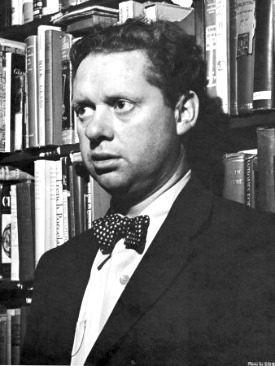
Dylan thomas, writing hut, writing shed, creativity

Photo credit: Tony in Devon.

I’ve seen the shed where Dylan Thomas did much of his writing (see above). It reminded me of the tiny shed where Roald Dahl wrote.

Dylan_Thomas_photo

Something that struck me about these amazing writers, was how extremely sparse their surroundings were.

Nothing fancy.

Just a space where they could think and work. A place where they could create.

The mechanics are secondary

Often, we get caught up in the mechanics of creativity. What software to work with, what type of pencils to use, whether to use a digital or analogue notebook.

And many creative professionals send more time searching the internet for so-called creativity hacks, than they spend producing their art.

To a lesser or greater degree, these are all stalling tactics. Once we have the basics in place, it’s time to start creating. Even if it’s in a tiny shed.

Dylan Thomas photo credit.

Filed Under: artists, Creative spark, Creative Thinking, Creative Writing, Inspiration, Problem Solving, The Creative Industries

Think creatively, like no one else

Jim Connolly March 31, 2025

There’s a wonderful quote from Albert Szent-Györgyi, which I’d like to share with you. It’s a simple, powerful insight into how geniuses think creatively.

“Genius is seeing what everyone else sees and thinking what no one else has thought.”

Szent-Györgyi is best known, as the man who discovered vitamin C. Vitamin C had always been there. Every time someone ate an orange, they were holding, looking at and consuming vitamin C. However, no one before Albert Szent-Györgyi had ever thought about vitamin C.

Creative thinking: From oranges to apples

Millions of people saw apples fall from trees. It was only Sir Isaac Newton who asked, “why?”.

Here’s the thing: We each possess a unique mind. However, it takes courage to use it uniquely… rather than accept perceived wisdom and false limitations.

Filed Under: artists, Create Like an Artist, Creative spark, Creative Thinking, Creative Writing, Inspiration, The Creative Industries

How to massively improve your creative output!

Jim Connolly January 30, 2025

Why is it, that some creative professionals seem to struggle more than others, when completing an important project?

creative thinking, creativity

When we look at the most successful creative professionals, we usually find that they are no more creative or intelligent than their less prolific counterparts.

However, they are different in one important respect: They look at their work in a very different way. They have discovered the importance of breaking large or daunting creative projects down, into manageable, achievable chunks.

Think about this for a moment.

  • No one writes a book.
  • No one composes a symphony.
  • No one develops a software package.

Instead, they write a little every day. They compose a little every day. They code a little every day. As a result, they don’t feel overwhelmed. They just do a little every day. And every day they move closer to completing their next creative project.

Chunk your project down. Commit to doing a little, often. When you do, you’ll never be daunted by the size or scale of a creative project again.

Filed Under: Create Like an Artist, Creative spark, Creative Thinking, Creative Writing, Design, Inspiration, Problem Solving, The Creative Industries

  • 1
  • 2
  • 3
  • Next Page »

Creative Thinking Hub

Developed by creative thinking expert Jim Connolly, this site is a source of ideas, resources and inspiration, to help you think more creatively.


Follow @jimconnolly

FeedSpot Creative Thinking Blogs

Feedspot

Hosting Sponsor 20i

Powered By 20i Green Web Hosting

Recent Posts

  • Marketing is dead: Long live Creative Growth
  • Human slop and the stupid game
  • Protect your creative freedom
  • Overcome creative burnout: Here’s the only advice you need
  • Stop buying crap: You’re already creative
  • Misfits: The people who make a difference
  • Consumption devices are production devices
  • Use creative thinking to sell more art
  • Uncreative branding: How to avoid it!
  • Uncreatives: Tech YouTube creators
  • Anti Creative: The AI slop problem
  • Don’t work for assholes
  • 15 Attributes of creative misfits
  • Creative thinkers: Lazy competitors are handing you their market share
  • Good artists copy. Great artists steal
Marketing Tips 2026

Copyright © 2026 Creative Thinking Hub