Creative Thinking Hub

Creative thinking expert Jim Connolly, shares tips & resources to help you think more creatively.

  • Home
  • About
    • Get in Touch
    • How Jim’s Brain Was Rewired
    • Creative Thinking Techniques: All of them
    • Creative Resources
    • What is Creative Thinking Hub?
  • Bring me your problem

4 Ways to refresh your mind and work smarter

Updated January 2026

Jim Connolly July 21, 2025

creativity, work smarter, refresh your thinking

The 4 ideas I’m about to share with you are very personal to me. They’re based on improvements I had to make, when I needed to work a lot smarter. In each case, the results have been exceptional. My hope is that you find them equally helpful.

Let’s go!

1. Improve your mindset

I used to go to work every day at an office. It wasn’t very motivating. So, one day I decided to change things. I decided to spend my days creatively solving problems in a studio.

All that actually changed was my mindset.

I was still doing the same type of projects. I was still sitting at the exact same desk in the exact same room. Yet, I was spectacularly more productive and enjoying my ‘work’ more than ever before. I also started unconsciously altering my office, until it looked like a creative studio. No desks, just a couple of production tables. Art and colour all over the walls. What once was work, was now creative play. What once was a dull office, was now an energetic studio.

When we change our mindset regarding work, everything else changes according to our new mindset. If you feel like you need to work smarter, try adopting a smarter mindset. Think of your current mindset regarding work. Then, make some exciting adjustments.

2. Improve your inputs

One of the easiest ways to work smarter is to be more intentional regarding what we feed our mind with. So many people start their working day by catching up with the news or our social media apps. They’re feeding their mind with inputs that are designed to grab their attention, with typically bad or tragic news stories. Social media apps know what makes us keep on scrolling, so they can feed us with ads.

And to a lesser or greater degree, they all combine to set our mental state for the rest of the morning or day.

If we want to start the day refreshed, so we can be at our productive best, we need to change our inputs; those things we feed our mind with. This means choosing to focus on what inspires us, teaches us, improves our mood, lifts us up or anything else that helps us be more productive and work smarter.

3. Improve your diet

You don’t need to be a nutritionist to know there’s a direct link between what we eat and how we feel. I’m not going to give anyone advice on what they should eat or avoid. However, I am going to recommend you take time to study nutrition.

You’ll see that there are certain foods that release a steady flow of energy, and others that give you spikes and lows. There are foods that make you feel good and foods that make you feel sluggish. So, do some research. Look for improvements. Eat better. You might be amazed how well your mind and body responds, just as I was.

4. Improve your working hours

An essential part of working smarter is to improve your working hours. The majority of self-employed people and business owners I know, typically work over 50-hours a week. Some work closer to 70-hours. Each has a different reason for doing it. But whatever their reason, it isn’t sustainable.

Here’s the thing: it’s pretty-much impossible to create our best work, when we’re working too many hours. A tired mind isn’t optimal. And a suboptimal mind isn’t capable of working smart.

It’s really important for us to set hard limits on how many hours a day we will work. Then stick to it. Broadly, this means either learning to be more productive, delegating more work to others, or taking less work on. There are tons of books on the subject, mostly saying the same thing.


Filed Under: Create Like an Artist, Creative spark, Creative Thinking, Creative Writing, Inspiration, The Creative Industries

A 1969 video shows Jim Morrison predicting electro & rap music! 

Updated February 2026

Jim Connolly July 12, 2025

jim morrison, electronic music, 1969, creative visionary, creative thinking

Never let the fear of criticism hold you back from creating your art. Today, I want to share an example with you, which makes this point beautifully.

1969: Jim Morrison predicts electro & rap

In 1969, the year The Beatles split, Jim Morrison was asked about the future of music. Here’s an amazing, direct quote from his answer:

“[…] it might rely heavily on electronics, tapes, I can kind of envision maybe one person with a lot of machines, tapes, and electronics set up, singing or speaking and using machines.”

You can watch the short video that quote is taken from, here.

From fool to visionary

At the time, Morrison’s prediction of what we now call electro music and rap, whilst his counterparts were playing Woodstock with flowers in their hair, was laughed at.

The idea of using machines rather than musical instruments, was too much for the masses to handle. It seemed like the foolish ramblings of a man with a well known drug problem.

Of course, it wasn’t.

Years after his death, Morrison’s prediction happened. He was duly elevated to the status of musical visionary.

The price for thinking differently

The price for thinking differently, is that you set yourself apart from the masses. By proactively embracing your creativity, you will see the world differently. Your art may be hard for others to understand or ahead of its time. When that happens, the masses are likely to laugh at you or criticise you.

As Einstein said: “Great spirits have always encountered violent opposition from mediocre minds”.

A great way to deal with this, is to use fear as your compass. Every great artist has encountered ridicule. If your work is not being attacked in some way, you’re probably playing it safe… not making a difference. It’s a sign you need to embrace the edges.

Photo by Олег Мороз 

Filed Under: artists, Creative Thinking, Inspiration

An unlimited supply of unique, creative inspiration

Updated January 2026

Jim Connolly July 6, 2025

barking

Nature has inspired creativity in people, since the first cave art. It’s a constant, beautiful and limitless source of creative inspiration.

I was thinking about that earlier, when I saw a photo I took a few weeks ago. The shot was taken during a walk through Sherwood Forest. As you can see, it’s just a close-up shot of the bark on a Silver Birch tree.

Unique, creative inspiration

As I looked deeper into the photo, I was able to see lots of shapes, shades, cracks, textures and colours. It’s also unique, as no two trees are exactly the same.

That got me thinking.

  • I wondered how useful that kind of unique combination would be to a visual artist.
  • How might that totally original composition inspire a fashion designer, in search of a new look?
  • How could it inspire the creativity of a web designer?
  • How would it inspire a furniture designer, looking for a fresh pattern or colour mix?

The next time you’re in search of some creative inspiration, remember that it’s all around you. You simply need to expose your senses to it and let your mind go where it takes you.

And remember: You don’t wait for inspiration to arrive. You command it to appear, because it’s there. All around you. All the time.

Filed Under: artists, Creative Thinking, Design, Inspiration

Creativity and the tools we use

Updated January 2026

Jim Connolly July 5, 2025

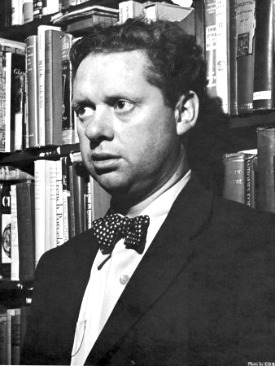
Dylan thomas, writing hut, writing shed, creativity

Photo credit: Tony in Devon.

I’ve seen the shed where Dylan Thomas did much of his writing (see above). It reminded me of the tiny shed where Roald Dahl wrote.

Dylan_Thomas_photo

Something that struck me about these amazing writers, was how extremely sparse their surroundings were.

Nothing fancy.

Just a space where they could think and work. A place where they could create.

The mechanics are secondary

Often, we get caught up in the mechanics of creativity. What software to work with, what type of pencils to use, whether to use a digital or analogue notebook.

And many creative professionals send more time searching the internet for so-called creativity hacks, than they spend producing their art.

To a lesser or greater degree, these are all stalling tactics. Once we have the basics in place, it’s time to start creating. Even if it’s in a tiny shed.

Dylan Thomas photo credit.

Filed Under: artists, Creative spark, Creative Thinking, Creative Writing, Inspiration, Problem Solving, The Creative Industries

Paul Rand: Defining design

Updated July 2025

Jim Connolly July 4, 2025

I was recently asked for my definition of design. I then recalled something the late, great Paul Rand said and decided to look up the full quote.

Paul Rand, design
Paul Rand

Here it is:

“Design is the method of putting form and content together. Design, just as art, has multiple definitions; there is no single definition. Design can be art. Design can be aesthetics. Design is so simple, that’s why it is so complicated.”
~ Paul Rand.

I thought I’d share this with you for 2 reasons:

  1. It’s a great definition from a legend of design.
  2. It may introduce some of you to Rand’s work.

I hope you find it useful.

NB: As well as designing the ABC, IBM and UPS logos, Paul Rand was also the man Steve Jobs turned to, for the branding at NeXT, the computer company he started when he left Apple.

Photo Copyright: Apple Computer/Chiat Day agency.

Filed Under: Design

How to find the answers you need, Einstein style!

Updated February 2026

Jim Connolly June 18, 2025

creative einstein, creative thinking experts, creative answers, jim connolly

One of the keys to problem solving, is to learn how to stick with the challenge for long enough to find the answer you need.

Einstein famously said: “It’s not that I’m so smart, it’s just that I stay with problems longer.”

I think we can all agree that Einstein was one of the greatest minds in history, however, his decision to stick with a challenge and work on it for a long time is something we can all benefit from.

Creative thinking requires effort

When I talk about creative thinking to young adults, one of the most common phrases I hear is a variant of; ‘It’s not as easy as it sounds’. Many people seem to be programmed to seek the easy or lazy answer by default. Then, if the answer doesn’t come easy, they quit. This places a very low ceiling on their potential, as there’s only so far someone can go if they are not prepared to think deeply, when required.

If I have a challenge that’s proving a tricky nut to crack, I employ a few creative strategies before I decide it’s beyond me.

  • I take the problem for a walk, ensuring I have a way to record any answers that come to me. As I am a divergent thinker, I need to capture ideas fast or I’ll lose them. Walking with a puzzle in my head is the best thing I have ever found for developing creative answers and ideas. Almost every tricky challenge I have is resolved this way.
  • I clearly define the challenge at the top of a sheet of paper, then write as many answers as possible. I allow my mind to flow and write down everything that comes to me. I also make sure the question is written correctly.
  • I talk to someone with expertise in the area where my challenge resides, with one massive difference. For example, if it’s a design problem I’ll talk to a designer, but to feed my mind with the least obvious, great answer, I’ll seek out a designer who works in a totally different field of design.
  • I talk to someone whose opinion I respect, yet who has no expertise on that area. This outside perspective has proven to be a goldmine of creative feedback, as their response directs me to look for answers in a new, often fertile direction.
  • I then give the challenge as long as required, before deciding the answer is beyond me. No matter how creative you are, if you’re unaware you lack a certain part of the problem (usually when a client or customer forgets to tell you), you’ll be wasting your time.

Some challenges come with a hard deadline, so there is a set timeframe within which the answer is needed. However, in most cases the deadline is more flexible than that.

In short: For us to stand the greatest chance of getting an above average answer, the best possible solution, we should persist for longer than the average person.

Photo by Collab Media 

Filed Under: artists, Create Like an Artist, Creative Thinking, Problem Solving, The Creative Industries

The creative power of writing every morning

Updated February 2026

Jim Connolly June 12, 2025

Creative, writing, morning pages

I recently watched this very old TED Talk by Steven Tomlinson. And I’m really glad I did. Though it isn’t the topic of Tomlinson’s talk, he mentions how useful he finds the process of writing 3 pages in a journal every morning. Although this practice (without the totally random 3-page rule), stretches back around 100 years before Julia Cameron was born, he credited it to her 1992 book.

I knew the practice preceded the book.

That’s because I’ve done something very similar, though with no set number of pages, ever since starting my creative work back in 1986! It’s simply a mind offload, akin to free-writing and borrowing from the Stoics practice of a couple of thousand of years ago. Initially, I thought it might be a way to clear my mind for the day ahead. However, I quickly realised that writing each morning was massively more useful than that.

It provided me with a daily place or space, to focus my thoughts, without even trying.

This has made it a powerful creativity tool, as fragments of thoughts often solidify into ideas as I write. There seems to be something about allowing your mind to flow, with no expectation or deliberate intent, and writing down whatever comes, which fires the imagination.

A totally creative process

Interestingly, Cameron limits the process to clearing negativity from your mind. I’ve never used it that way. I don’t dump negativity onto the page. For me, writing in the morning is a wholly creative process.

I just relax and allow my thoughts to wander and flow through the tip of the pen.

Then, the sparks happen.

New ideas and new directions come to me.

Not every morning. But often enough to make this extremely valuable, when used as a creative practice.

I’ve shared this idea with countless overs over the years and the feedback has been almost universally excellent.

Filed Under: Creative Thinking

Think creatively, like no one else

Updated January 2026

Jim Connolly March 31, 2025

There’s a wonderful quote from Albert Szent-Györgyi, which I’d like to share with you. It’s a simple, powerful insight into how geniuses think creatively.

“Genius is seeing what everyone else sees and thinking what no one else has thought.”

Szent-Györgyi is best known, as the man who discovered vitamin C. Vitamin C had always been there. Every time someone ate an orange, they were holding, looking at and consuming vitamin C. However, no one before Albert Szent-Györgyi had ever thought about vitamin C.

Creative thinking: From oranges to apples

Millions of people saw apples fall from trees. It was only Sir Isaac Newton who asked, “why?”.

Here’s the thing: We each possess a unique mind. However, it takes courage to use it uniquely… rather than accept perceived wisdom and false limitations.

Filed Under: artists, Create Like an Artist, Creative spark, Creative Thinking, Creative Writing, Inspiration, The Creative Industries

Improve your creative thinking, with more colour

Updated January 2026

Jim Connolly March 26, 2025

creative thinking colour, colour and creativity

There’s a direct link between the use of colour (or color for my US readers), and creative thinking. If you could see the explosion of colour in my studio, you’d know I’m a big believer in this.

It’s hard to think in colour, when your world has the brightness turned down. Yet as adults, many non-creative people surround themselves with a very limited range of colours. Their homes, furniture, offices and clothes are toned down to the point where they almost blend into the background.

Here’s the thing: As scientific studies have found, colours can have a measurable impact on how we feel and how we think.

Children, colour and creativity

Have you ever noticed how colourful kids stuff is? Pretty-much everything they use is extremely colourful. From their toys and cutlery to their books, clothing, bedding and toiletries, everything is bright and pumped full of colour. These colours help keep children engaged, interested and it stimulates their mind.

The good news for us as adults, is that colour can be deliberately used to stimulate your mind, too.

Introducing colour to your creativity

Now, whilst I am not suggesting you start dressing in technicolor, unless you want to, I am suggesting you introduce as much colour into your creativity as possible.

Creativity colour pens

Pens I’m using in the studio today.

For example.

  • Use multicoloured pens and pencils when you think on paper.
  • If you do a lot of your thinking in your office, have some really colourful desk items around you. Highlighters, pen holders, Post-it notes, your phone charger, writing pads and your coffee mug, etc., these all come in a multitude of creativity inspiring colours.
  • Put some bright, colourful pictures or posters on your office or studio wall.
  • … You get the idea.

The blue secret

Will the introduction of all this colour instantly turn you into a creative thinking powerhouse? No. No they won’t. But colours do have an impact.

For instance, blue has been shown to help with creative thinking. It’s believed this happens, because we associate the colour blue with relaxation, cloud-free skies and cool blue water. I use blue here on this site for links and certain buttons. They perform very well.

Here’s a suggestion. Start small. Get yourself some different coloured pens or pencils and use them, the next time you are developing ideas. Use bright coloured highlighters to mark-up your work. When you see the difference this makes, it may inspire you to introduce more colour to your creative thinking universe.

Filed Under: artists, Create Like an Artist, Creative spark, Creative Thinking, Design, Inspiration, Problem Solving, The Creative Industries

Old ways seldom open new doors

Updated January 2026

Jim Connolly March 18, 2025

If you’re struggling with a new problem, you may need new tactics or a new strategy.

If you’re struggling with a lingering problem, you definitely need new tactics or a new strategy.

So, stay agile. Old ways seldom open new doors.

Filed Under: Creative Thinking, Inspiration, Problem Solving, The Creative Industries

  • « Previous Page
  • 1
  • 2
  • 3
  • 4
  • 5
  • …
  • 25
  • Next Page »

Creative Thinking Hub

Developed by creative thinking expert Jim Connolly, this site is a source of ideas, resources and inspiration, to help you think more creatively.


Follow @jimconnolly

FeedSpot Creative Thinking Blogs

Feedspot

Hosting Sponsor 20i

Powered By 20i Green Web Hosting

Recent Posts

  • Marketing is dead: Long live Creative Growth
  • Human slop and the stupid game
  • Protect your creative freedom
  • Overcome creative burnout: Here’s the only advice you need
  • Stop buying crap: You’re already creative
  • Misfits: The people who make a difference
  • Consumption devices are production devices
  • Use creative thinking to sell more art
  • Uncreative branding: How to avoid it!
  • Uncreatives: Tech YouTube creators
  • Anti Creative: The AI slop problem
  • Don’t work for assholes
  • 15 Attributes of creative misfits
  • Creative thinkers: Lazy competitors are handing you their market share
  • Good artists copy. Great artists steal
Marketing Tips 2026

Copyright © 2026 Creative Thinking Hub